Write the worry down and it has somewhere to stop

It is three in the morning and the same thought has come round again. The test results. The thing your sister said at dinner. The bank balance. Your head can run it forever because thinking costs nothing, so the thought never has to finish.

So you turn on the lamp and pick up the pen. Your hand is slower than the worry, and the worry has to slow down to fit into a sentence. A sentence has an end. You write it, you close the book, and the loop finally has somewhere to stop.

In the morning the worry looks smaller. The sentence is still there, in your handwriting, exactly where you left it. That is the part nobody tells you about.

A hand holding a journal with a pen tucked in over rumpled bedding

You will want to know how you got through it

Think about the hardest season you have lived through. The diagnosis, the divorce, the winter of hospital parking lots and phone calls in the car. You got through it. Now try to remember how, and your head hands you a blur.

A fast head does that. It smooths the hard months over so you can keep going, and it takes the details with it: what you were afraid of on a Tuesday night, what you decided, the morning it turned.

A page written that night does not smooth anything over. Reading it back is like finding a letter from a woman who was braver than she knew. That woman was you.

An older woman reading back through an open journal at her table, a cat beside her

The phone is where three in the morning goes to disappear

You have probably tried the notes app. You type the true thing, you look at it, and you delete it. Or you keep it, and by spring it is buried under a grocery list, a parking spot and a screenshot you meant to send someone.

Paper does not scroll. There is no delete key and no feed waiting behind the page. What your hand writes stays where you put it, and it looks the way that night felt: pressed hard, a little crooked, crossed out once and written again.

That crooked line is the thing worth keeping. A typed note cannot show you how it felt. Your handwriting can.

A page of dense handwriting with a fountain pen and a bottle of ink

It only asks for the nights you need it

A dated planner gives every day its own page, so every good night you slept straight through becomes a blank square. A few of those and it starts to read like a report card, and into the drawer it goes. That was never your fault. It was the format.

The Momento has no printed dates. It can sit on your nightstand for weeks and ask nothing of you. Then a hard night comes, you open to the next clean page, and you are not behind on anything.

You are not keeping a streak. You are keeping the nights that mattered.

A closed journal with a pen on a table beside a lamp

When the paper fills, the cover stays

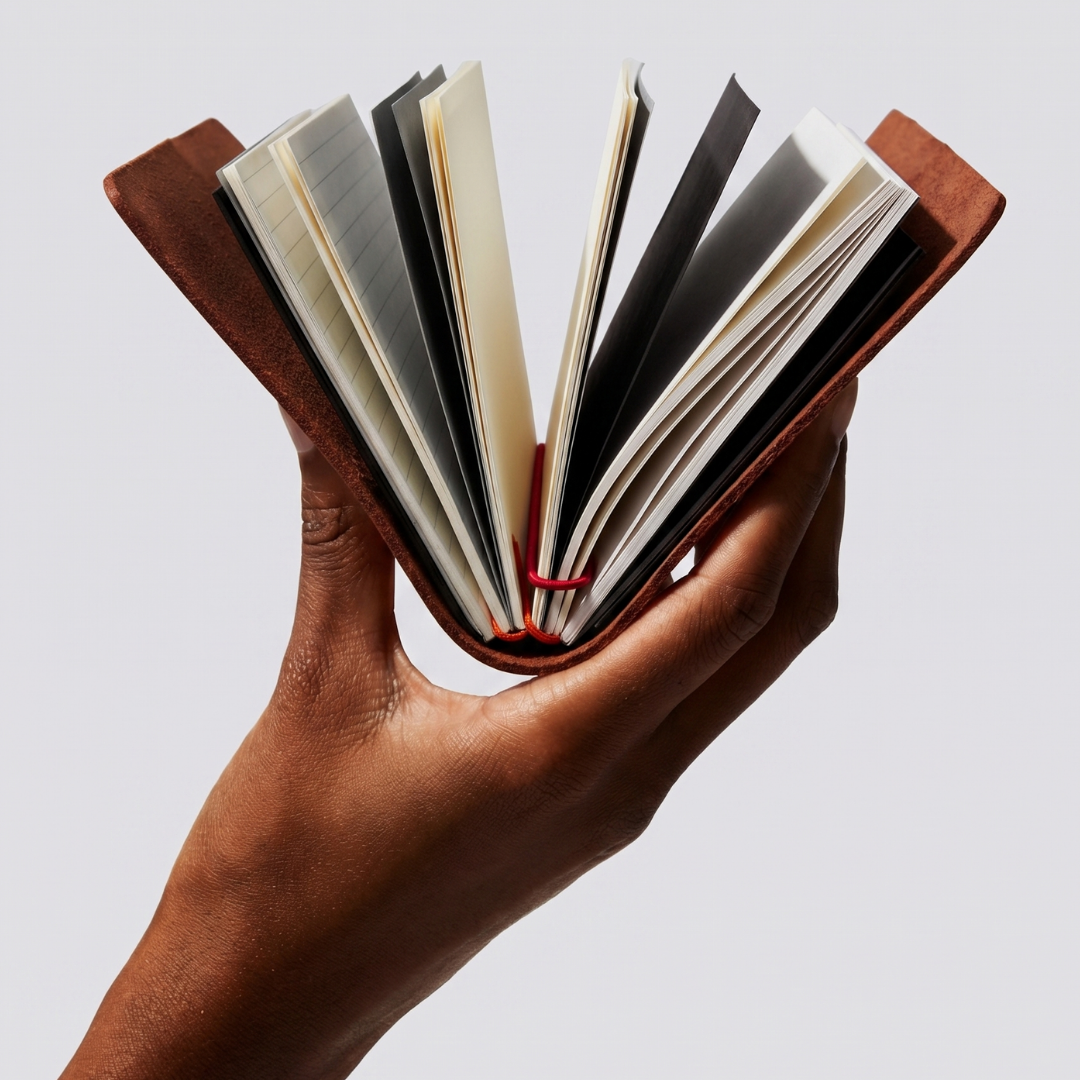
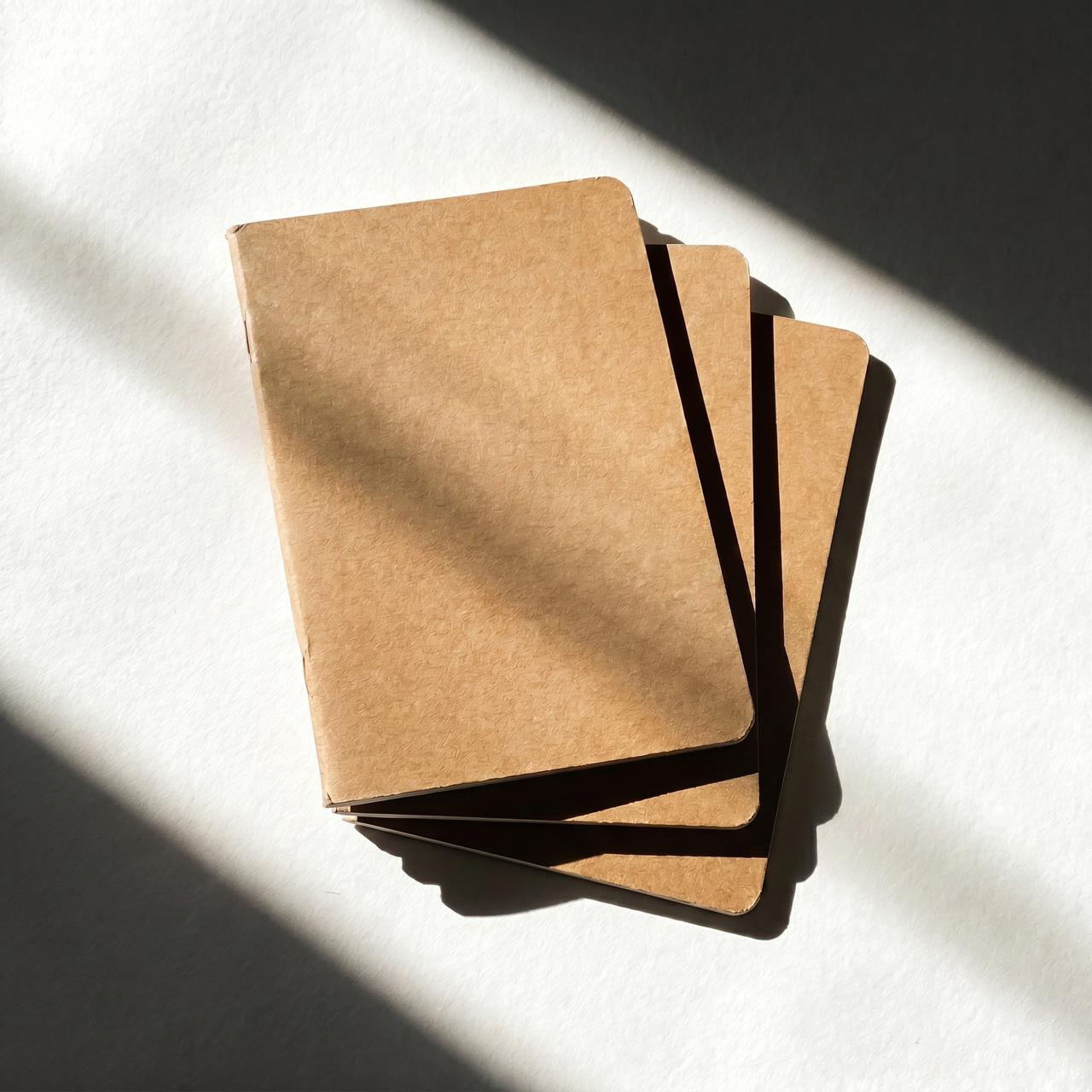
There are no stitched-in pages. The paper comes in slim inserts that sit on elastic bands inside the cover. When one fills, you slide it out, write the season on the front, and slide a fresh one in.

The cover that carried you through the hard months carries the next ones. The finished inserts go on a shelf or into a box, and each one is a season you can open again whenever you want to see how far you came.

A notebook ends and gets replaced. This is one cover that refills for life, so the record keeps growing in the same place.

A lined insert, a blank insert and a clear zipper organizer laid out together

It holds the rest of that season too

Hard seasons leave paper behind. The appointment card. The note a neighbor left on the door. A flower from the garden the week things finally got better. Most of it ends up in a kitchen drawer, and then one day it is gone.

The zipper organizer that comes inside the Momento keeps those things with the pages you wrote the same week. The card, the photo, the pressed flower, all in the same cover.

Years from now you will open it and find the hard night and the proof that it ended, side by side.

An open journal page filled with pressed flowers and handwritten notes

Built to be the one you keep

Tonight, put it on your nightstand with a pen. When the loop starts, turn on the lamp and write one line. It does not need to be good. It only needs to be true.

The cover has a lifetime warranty and the paper refills for life, so the book you start in the worst month of your year can still be the one you are writing in long after. Pocket is about 4 by 7 inches and fits in a nightstand drawer. Classic is 5 by 8 if you like room to write. And there are 100-day returns if it is not the one for you.

You are the one who got through it. The night will pass. Let the page stay.

A cream lace-embossed journal standing on a stack of old books in low light

Frequently asked questions

What does my Momento come with?

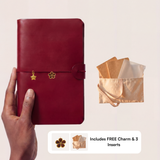
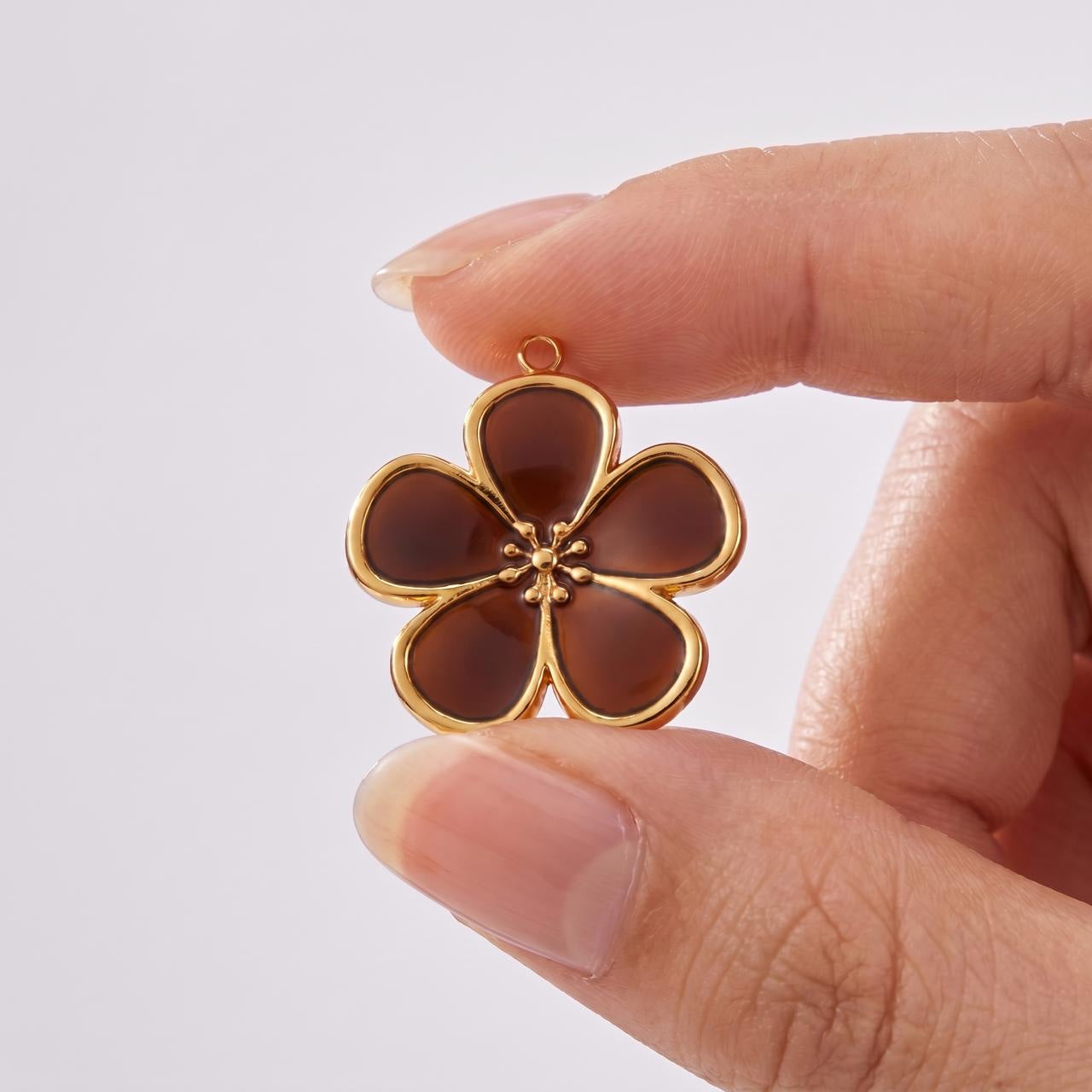
The complete starter kit. Your cover in the size and color you pick, two 76-page Daolin inserts, and a zipper organizer for cards, stamps, photos, or loose notes. Restock Event adds a complimentary charm. Everything you need to start writing on day one.

How is this different from a Moleskine or Midori?

A Moleskine is a notebook. You fill it, finish it, buy another. A Midori is a traveler's notebook system designed around buying inserts separately. Momento is the refillable cover plus a complete starter kit in one box, with US shipping and a lifetime warranty. Same cover, new pages, forever.

Pocket or Classic, which is for me?

Pocket if you carry it daily and write in shorter sessions. Back pocket, jacket, small purse. Classic if you sit down to write. Letters, longer entries, sketching, planning. Pocket fits anywhere. Classic gives you room to breathe.

Will it fit in my bag?

Pocket fits a back pocket, small purse, or jacket pocket. Classic is a bit larger than the size of a paperback and lives in a tote or purse.

What's the paper like?

Each insert has 76 pages of smooth, high-quality Daolin paper. It is fountain-pen friendly with minimal bleed-through and feathering, so it handles everything from a pencil or gel pen to a wet fountain nib beautifully.

How do refills work?

Slide the used insert out, slide a new one in. Refill 3-packs start at $19. That's about 228 pages for the cost of one decent notebook. Most customers set them on a 3-month cadence and stop thinking about it. Skip, pause, change cadence, or cancel from your account anytime. No phone calls, no retention scripts.

What does the lifetime warranty cover?

Binding failure, cover failure, and hardware like the grommets. If something structural breaks, we replace it for free immediately, no questions asked, no shipping fee.

Is this a good gift?

Yes. Every Momento ships in a gift-ready linen bag, so you can hand it over as-is. It's our most-gifted product. If you're unsure on color, Bordeaux and Mocha are safe picks for someone whose taste you don't know well.

What if I don't love it?

Try Momento for 100 days. If you don't fall in love, easy 100-day returns. Just email help@stillarchive.com and we'll take care of it. We'd rather you find out it isn't right than keep something you won't use.

What changes in 30 days?

Based on a survey of 3,000+ Momento buyers

87%

Stayed consistent longer

94%

Stopped reaching for their phone first

3.2 hrs

Fewer screen time per day

89%

Say it is the first journal they finished

Why Momento sticks when everything else gets abandoned.

Most of us have three of these already. Most of us stopped using all three within a month.

Criteria Momento Your Notes app Moleskine Your last planner
Still being used 6 months in
Off the cloud. Into your hands.
A separate space for each part of your lifeA separate space for each part of life Sort of
Runs out? Keep the cover. Replace the pages. Sort of
Feels like something you want to hold
Backed for life

This is the one you keep, because it keeps up with you.

The Momento™ From $69 a free charm included Claim Yours + a free charm